
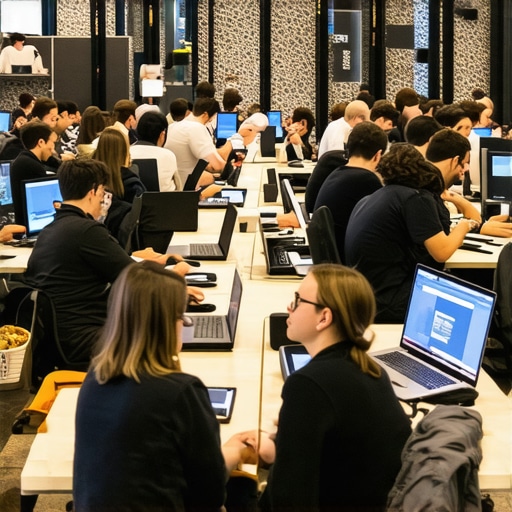
I still remember the smell of lukewarm pepperoni and the sound of fifty fans whirring as my first attempt at a large-scale hackathon went up in literal (metaphorical) smoke. I had booked a beautiful open-plan area, thinking the vibe alone would carry us through the weekend. Instead, I spent twelve hours playing human router because the “business-grade” internet crumbled the second twenty developers tried to push code at once. It was a humbling lesson in the difference between a pretty office and a functional war room. If you are planning to pack fifty hungry, ambitious builders into a shared space, you aren’t just renting desks; you are managing a delicate ecosystem of power, bandwidth, and caffeine. Today, I am sharing the hard-won secrets to making it work so you do not end up apologetically handing out Starbucks gift cards for internet downtime.
Your Wi-Fi Will Fail Unless You Test This
The biggest mistake I ever made was assuming that “available seating” meant “available capacity.” A coworking space might have fifty chairs, but that does not mean their circuit breakers are ready for fifty high-end laptops and a dozen monitors. Early in my career, I tripped a breaker just by plugging in two extra industrial coffee urns. You need to vet the space for high-speed fiber and electrical load before you even send out the first invite. You have to be the person who asks about the “per-user bandwidth cap” because, trust me, your attendees will know if you did not. Did you know that a single developer can consume up to 10GB of data during a weekend sprint just in environment setups? According to Cisco’s Visual Networking Index, global IP traffic has increased nearly threefold in recent years, making “good enough” Wi-Fi a relic of the past.
Is a shared space actually big enough for 50 hackers?
It is a fair question to be skeptical about. You might think you need a massive warehouse, but the magic of a creative coworking layout is how you can segment the space. You do not need one giant room; you need a hub with spokes. I have found that developers need quiet zones to reach deep flow, which means you should be eyeing those glass-walled meeting rooms for specific teams rather than one big hall of noise. If you do not provide dedicated “war rooms,” people will start nesting in the kitchen or, worse, the hallways. Have you ever tried to coordinate a large event only to realize half your guests are hiding in the lobby because of the noise? Drop a comment and tell me your worst event logistics nightmare—I promise I will not judge.
The Secret of the Spare Charger and the Silent Room
When you are scaling a hybrid team without a corporate HQ, your event is the only time everyone sees the company culture in person. This is why the little things, like having a stash of extra chargers or knowing how to find quiet spaces in a busy downtown hub, can save your reputation. I used to think the “cool” factor of a space mattered most. Now, I know it is about the proximity of the bathrooms and whether the HVAC can handle fifty people’s body heat in the middle of a coding sprint.
Stop assuming the HDMI cable actually works
I once tried to run a demo day in a space where the promised large screen was actually a projector from 2005. The colors were washed out, the text was illegible, and the lead founder looked like a vibrating ghost on the wall. I learned the hard way that why your pitch deck looks better on a forty-inch screen than a laptop isn’t just about resolution; it is about the professional signal you send to everyone in the room. You have to be the one walking into the space 48 hours early to test every port. Do not just ask if they have AV; follow the checklist for a glitch-free product launch event and verify it yourself. If you are doing a high-stakes demo, a single faulty dongle can kill the momentum you spent months building.
Check the hardware before the crowd arrives
Your tech stack for an event is a house of cards. Most startup hubs offer great hardware, but you need to verify compatibility with both Mac and PC. I have seen entire hackathons stall because the host did not realize their innovative meeting rooms that boost startup creativity were locked behind a proprietary wireless casting system that half the guests could not access. Always demand a physical backup—hardwired HDMI is the gold standard for a reason. 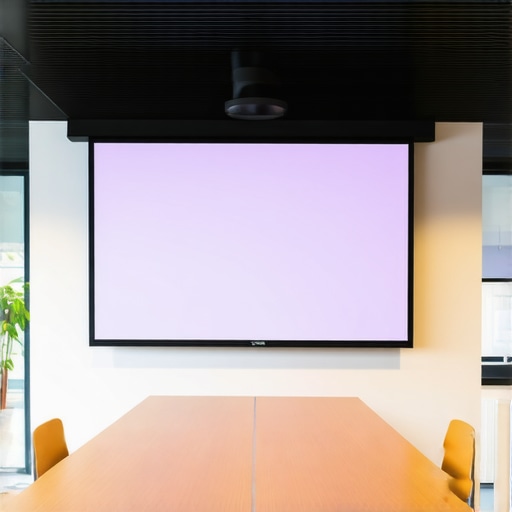
Design the room for movement and pivots
When you cram fifty people into a space, the layout becomes your primary tool for crowd control. If you leave the furniture in a standard classroom style, you are killing the energy. You need to treat the floor like a living map. Think about how people move when they are caffeinated and stressed. This is why your meeting room needs to be more than just a table; it needs to be a modular zone that can shift from a focus pod to a collaborative circle in under two minutes.
Create zones for different energy levels
I used to think one big open floor was the ultimate ‘startup vibe.’ I was wrong. By hour four, half the group wants to scream ideas at each other while the other half needs to enter deep focus. Use the building’s infrastructure to your advantage. Send the loud brainstormers to the lounge and keep the core workspace as a sanctuary. If you are renting a premium location, you should already have the exact checklist for vetting a high-stakes board room to ensure you have spillover space for private side-bars or sensitive investor chats.
Silence is the most expensive amenity you can buy
I remember hosting a series of lightning talks where I forgot to check the acoustic bleed from the neighboring office. Every time a founder hit their punchline, we heard the muffled roar of a sales team next door celebrating a closed deal. It was a disaster for the recording and even worse for the live vibe. You must know how to manage noise complaints in a shared workspace before they happen. If you don’t account for sound, your fifty-person event will either annoy the regulars or be drowned out by them. Always perform the acoustics test every conference room should pass—stand in the middle of the room, stay quiet for sixty seconds, and listen to what the walls aren’t stopping. If you can hear a microwave beep or a phone vibrate next door, your event needs a different wing.The biggest myth in the startup world is that a ‘cool’ office automatically leads to a ‘cool’ culture. I have seen founders drop five figures on a space because it had a slide and a craft beer tap, only to realize six months later that the true cost of free coffee is the constant disruption of their team’s deep work. If your team is spending more time at the espresso bar than in a ‘war room,’ you aren’t running a startup; you’re running a social club. The hidden nuance that most people miss is that productivity isn’t about the perks you add; it’s about the frictions you remove. You need to know how to spot a toxic coworking vibe before you sign that membership agreement. A space that prioritizes ‘networking events’ over high-speed infrastructure is a trap for early-stage teams who need to execute, not just mingle.
Can you actually calculate the ROI of physical proximity?
It is a question I get from cynical CFOs all the time. While digital tools are great, a study published in the Harvard Business Review highlights that face-to-face interactions are the most significant predictor of a team’s energy and engagement. However, the mistake is assuming any shared desk will do. You need to be intentional about why proximity to other startups accelerates your growth. It is not about sitting near anyone; it is about being in an environment where the ‘collision’ leads to a solution, not a conversation about the weather. Have you ever fallen into this trap of choosing style over substance? Let me know in the comments. 
The dangerous lure of the long-term lease
Another ‘oops’ factor I see constantly is the urge to ‘plant roots’ too early. Founders often think a five-year lease on a private office proves they have ‘arrived.’ In reality, it is often an anchor that prevents them from pivoting. This is why membership flexibility is more important than square footage during your first three years of growth. When you are scaling, your team size can double in a weekend. If you are locked into a rigid floor plan, you will end up with a team that is either rattling around in a ghost town or literally sitting on each other’s laps. You should always tell if a coworking membership is worth the price by how easily you can scale up or down.
Stop treating your conference room like a storage unit
I have walked into dozens of ‘innovative’ spaces only to find the main meeting room filled with extra monitors and dead plants. This is a massive professional signal failure. When you are hosting investors in professional spaces, the environment does half the selling for you. If the room feels like an afterthought, your pitch will too. You need to treat these spaces as high-performance stages. That means ensuring your conference room needs better technology and fewer cables. Every minute you spend fumbling with a dongle is a minute you aren’t talking about your valuation. If you want to win, you have to stop assuming ‘available’ means ‘ready.’ Success is in the details you usually ignore until they break.The mistake most founders make is thinking that once they have signed the membership, the work is done. It isn’t. You are now the ‘Product Manager’ of your physical environment. I have started carrying a ‘Commando Kit’ for every meeting—a rugged case with a high-gain Wi-Fi antenna, three different HDMI-to-USB-C adapters, and a dedicated 360-degree microphone. This is why your conference room needs better technology and fewer cables. If you rely solely on the house hardware, you are betting your company’s future on a ten-dollar cable bought in bulk. I have seen 4K displays stutter because the space used a sub-par splitter. You have to be obsessive about how to maximize productivity in your startups conference rooms by auditing the tech stack yourself. According to the Jabra Hybrid Ways of Working 2023 Global Report, nearly 80% of employees feel that ‘meeting equity’—where everyone is seen and heard clearly—is the top driver of engagement. If your remote team feels like second-class citizens because of a grainy camera, you have already lost the culture war.
How do I maintain a high-performance environment as we scale?
It is about creating a physical anchor that does not weigh you down. As you grow, you will realize the logic of choosing a flex office over a 5-year lease is the only way to stay agile. I predict that the next five years will see a massive shift toward decentralized HQs, where why satellite offices are the new headquarters for tech teams becomes the industry standard. We are moving away from the single ‘Mother Ship’ office and toward a network of high-performance nodes that can be activated on demand. #IMAGE_PLACE_HOLDER_D# Maintenance isn’t just about wires; it is about digital hygiene. You need to know how to keep your startups trade secrets in an open office by using physical privacy screens and encrypted guest networks. Do not just trust the default guest login. If you are serious about the future of conference rooms in startup ecosystems, start treating your meeting room time like a software release: beta-test the room, patch the vulnerabilities (like that echoey wall), and only then invite the ‘users’—your investors. My challenge to you: Before your next big pitch, go to the space 24 hours early and try to ‘break’ the Wi-Fi. If you cannot make it fail under a stress test, you are finally ready.
Lessons From the Trenches of Startup Logistics
After years of coordinating these high-stakes sprints, I have realized that the environment is your silent partner. First, you must recognize the difference between a standard meeting room and a real war room. One is for status updates; the other is for survival and breakthrough. I have seen teams collapse because they didn’t realize the difference between a standard meeting room and a real war room until the air conditioning failed. Second, don’t underestimate the vibe shift that happens when you move from a dark basement to a space with actual windows. I always tell founders to vet a potential office space for natural light because it directly impacts team stamina during hour ten of a hackathon. Finally, stop being the person who misses deliveries. You need a system for how to handle package deliveries without a permanent front desk staff, or you will spend half your event chasing the courier instead of leading your team.
My Zero-Failure Event Toolkit
To avoid the nightmares I faced early on, I never show up to a hub without my specific readiness kit. I prioritize hardware that offsets the hidden drag of slow office Wi-Fi, including my own dedicated hotspot for emergencies. For remote-first teams, I recommend mastering the exact lighting setup for professional video pitches, because grainy shadows can kill a VC’s confidence faster than a bad slide. I also swear by a 48-hour pre-check using the exact checklist for vetting a high-stakes board room. It isn’t just about the tech; it is about knowing that every chair, cable, and coffee pod is exactly where it needs to be before the first guest walks in.
#IMAGE_PLACEHOLDER_E#
Your Vision Deserves a Real Stage
Transitioning from a scrappy home setup to a professional hub is more than just a logistical move; it is a declaration of intent. When you learn how to transition your team from a garage to a real office, you are giving your ideas the room they need to breathe and expand. It is about moving from making it work to making it scale. Remember, startup success secrets often hide in the mundane details of choosing the perfect conference room. Don’t let your hard work be overshadowed by a flickering screen or a noisy hallway. You have built something incredible—now give it the environment it deserves to win.
What is the one tech failure that keeps you up at night before a big event? Let me know in the comments below!