

I was three minutes into a high-stakes investor update when I realized the entire room knew my burn rate, my Q4 projections, and my secret fear of failing. I was pacing the common area like I owned the place, while half a dozen freelancers stared at me with varying degrees of murder in their eyes. I had become the person I used to roll my eyes at. Since that embarrassing afternoon, I’ve had to learn—the hard way—that taking a call in a shared environment isn’t just about finding a strong signal; it’s a social minefield. Today, I’m going to share how you can keep your professional integrity (and your friends) while working in a shared space. We will tackle exactly when to stay put, when to run for a booth, and how to spot those invisible boundaries.
Your Private Conversation is Currently Public Property
Early in my startup journey, I made a massive mistake: I assumed that because everyone had headphones on, they couldn’t hear me. I was wrong. Taking a call in the open lounge is one of the fastest ways to lose respect from your peers. Not only is it distracting, but you are also actively risking your business secrets. I learned that how to keep your startups trade secrets safe in a public lounge starts with closing your mouth when you aren’t in a secure area. It took one sensitive client call being overheard for me to realize that “private” is a relative term. If you are pitching, the stakes are even higher. I’ve seen founders lose their rhythm because they were worried about who was listening. There is a specific reason why your pitch fails in a noisy lobby, and it usually involves your own lack of focus as much as the background clatter. You need a space that passes the acoustics test every conference room should pass if you want to sound like a professional rather than a hobbyist.
Is Absolute Silence Even Possible in a Startup Hub?
You might be thinking that a coworking space is inherently loud, so why should you be the one to whisper? It’s a fair question. However, there is a difference between the hum of a coffee machine and a loud one-sided conversation about a legal dispute. A landmark study by the University of Sydney revealed that noise distraction is the leading complaint among employees in open-plan environments, with over 50% of workers citing it as their biggest productivity killer. I had to learn how to manage noise complaints in a shared workspace by being the one who stopped making them. Have you ever been the person accidentally sharing your life story with the whole room, or are you usually the one wearing the “do not disturb” headphones? Let me know—I’ve definitely been both. We need to find that balance between being a helpful neighbor and getting our work done without being an accidental eavesdropper’s dream.
Stop Treating Every Room Like a Catch-All Space
I once walked into a high-stakes investor call thinking I was prepared because I had my laptop and a cup of coffee. Ten minutes in, I realized I was in a glass-walled ‘fishbowl’ with zero acoustic dampening, and the glare from the sun made my pitch deck invisible to the camera. It was a disaster. Since then, I’ve realized that where you sit determines the quality of what you say. If you want to get serious, you need to learn how to maximize productivity in your startups conference rooms by 0245 pm rather than hoping a random desk will suffice. Choosing a room isn’t just about grabbing the nearest available seat; it’s about matching the environment to the stakes of the conversation.
The Goldilocks Principle for Meeting Sizes
Booking a twelve-person boardroom for a two-person sync is a waste of resources and, frankly, it feels awkward. I always stick to the two-pizza rule for booking the right size meeting room. If the group is small, keep the space intimate to maintain high energy. When you are in a room that is too large, the echoes and the physical distance between participants kill the collaborative vibe. On the flip side, cramming five developers into a phone booth is a recipe for a localized oxygen crisis. It’s about balance. I’ve found that why your meeting room needs to be more than just a table often comes down to the psychological impact of the environment on your team’s creative output.
Hardware is Your First Line of Defense
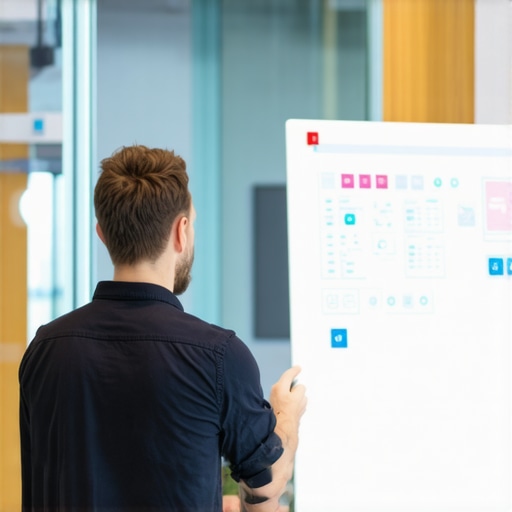
Nothing kills a deal faster than saying, ‘Can everyone see my screen?’ for five minutes straight. My low point was trying to use a tattered VGA cable I found in a junk drawer during a demo. Now, I never book a space without knowing how to find a conference room that actually has working adapters beforehand. You should be looking for rooms that offer plug-and-play simplicity. This is also why many why founders are moving back to physical brainstorming sessions; the friction of digital tools often outweighs the benefits of a quick, analog whiteboarding session in a well-equipped hub.
Audit Your Privacy Before the Call Starts
Before you hit ‘Join Meeting,’ you need to do a 360-degree sweep. Can people walking behind you see your screen? Is the person at the next table likely to start a loud conversation? I’ve learned that how to vet a meeting room for acoustic privacy before booking is a survival skill for the modern founder. If you’re discussing burn rates or hiring, you can’t afford an audience. I once saw a competitor’s product roadmap because he left his laptop open in the communal kitchen while getting a refill. Don’t be that person. Protecting your company means being intentional about your physical footprint.
Create a Space That Inspires Confidence
If you are bringing an external partner into your coworking world, the room should reflect your brand’s maturity. Look for the checklist for a boardroom that doesnt feel like a hospital. You want a space that feels professional but vibrant. If the walls are bare and the lighting is harsh, your ideas will feel sterile too. I also keep a close eye on the bottom line by learning how to save money on office amenities your team doesnt use, focusing our budget on the high-impact meeting spaces where the real decisions happen. When you control the environment, you control the narrative of your startup.
I used to think that a conference room was just a box with a table and a few chairs. I was wrong. Most founders fall into the trap of thinking that the ‘best’ room is simply the one with the biggest screen or the newest chairs. In reality, the nuance of space selection can make or break a deal before you even open your laptop. Everyone tells you to find a quiet space, but in my experience, silence can sometimes be a productivity killer. There is a psychological weight to a room that many people ignore. If you’re in a sterile, windowless box for a creative session, your brain shuts down. I’ve found that innovative meeting rooms that boost startup creativity are those that balance comfort with a sense of momentum.
The Transparency Trap You Haven’t Considered
Here is a mistake I see senior leaders make constantly: they book the beautiful, glass-walled ‘fishbowl’ for a sensitive board meeting or a difficult termination. They think it looks modern and transparent, but it’s a tactical disaster. I call this the ‘transparency trap.’ When you are in a high-stakes negotiation, your body language is a secondary stream of data. If the entire floor can see your lead investor shaking their head or your CTO looking defeated through the glass, you’ve lost control of the narrative. This is exactly how to handle high-stakes board meetings in a shared building—you go for the opaque walls. You need a space where the energy stays contained within the four walls, not leaked out to every passerby with a coffee mug.
Does Your Environment Actually Change Your Negotiation Strategy?
It sounds like a reach, but the physical environment significantly dictates how you behave. A study published in the Journal of Environmental Psychology found that high ceilings can encourage more abstract and creative thinking, while lower ceilings are better for detail-oriented, concrete tasks. I started applying this to my bookings. If we are doing a deep dive into the cap table, we want a focused, intimate space. If we are mapping out the next three years of the company, we need volume and light. I’ve learned to recognize the difference between a standard meeting room and a real war room based on the task at hand. If you treat every meeting like it requires the same environment, you are leaving performance on the table.

Don’t Let Your Tech Obsession Distract Your Audience
We’ve all been there: the founder who spends twenty minutes trying to get the 4K projector to sync while the investors check their watches. While why your pitch deck looks better on a forty-inch screen than a laptop is undeniable, the hardware should never be the star of the show. The most advanced mistake you can make is relying on technology to do the heavy lifting of your presence. I’ve seen pitches succeed on a cracked iPad because the founder owned the room, and I’ve seen them fail in ‘smart’ rooms because the founder was intimidated by the interface. Before you sign that membership agreement, you need to know how to spot a toxic coworking vibe in under five minutes, which often includes looking at how much the community actually uses the ‘fancy’ tech versus how much it just sits there gathering dust. Have you ever fallen into this trap of over-relying on a flashy room to hide a shaky pitch? Let me know in the comments—I’ve definitely been there more than once.
I’ve spent the last three years bouncing between shared lounges and high-end boardrooms, and if there’s one thing I’ve learned, it’s that your personal kit is your real headquarters. You can’t always control the Wi-Fi or the neighbor’s volume, but you can control your output. I never walk into a meeting without my own dedicated hardware, because relying on the ‘house’ setup is a gamble I’m no longer willing to take. This is why I obsess over the acoustics hack for crystal clear client pitches—it’s not about the room; it’s about the signal you send out. I carry a directional USB microphone and a portable ring light everywhere. I’ve even seen how much of a difference it makes when why our private office suites stock extra surface pro chargers for members; it’s those small, logistical lifelines that keep a startup from grinding to a halt during a pitch.
How do I maintain professional standards over time?
Consistency is the silent killer of most startups. You start with high energy in a trendy hub, but as the months drag on, you get lazy. You start taking calls from the kitchen again because it’s ‘faster.’ To fight this, I treat my workspace booking like a sacred ritual. If you are scaling from 2 to 20 when to stop hot desking becomes a question of culture rather than just budget. You need a space that anchors your team and sets a standard for what ‘work’ looks like. According to the ITU-T Recommendation P.800, which defines the Mean Opinion Score (MOS) for voice quality, even a slight drop in audio clarity can significantly increase cognitive load for your listener. If your meeting room doesn’t help you hit that high MOS, you are literally making it harder for investors to understand your value proposition.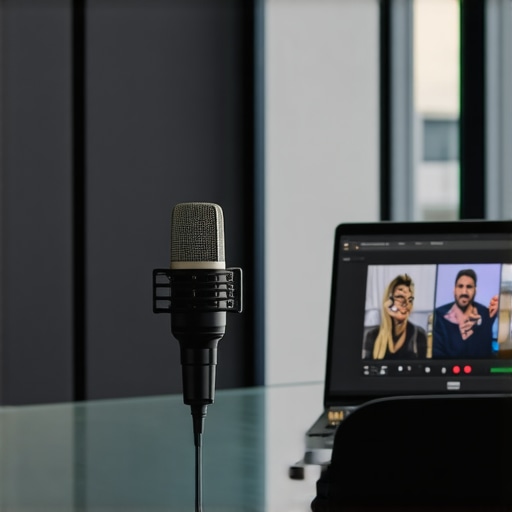
Future-Proofing Your Space is a Survival Tactic
As we look toward the next few years, I predict we will see a massive shift toward modular, AI-integrated environments. We aren’t just talking about smart lights; we are talking about rooms that automatically adjust acoustic dampening based on the number of people inside. This is the future of conference rooms in startup ecosystems, and those who adapt early will have a massive competitive advantage. You won’t just be renting four walls; you’ll be renting a performance-optimized environment. Successfully managing the logistics of scaling a hybrid team without a corporate hq requires a platform that bridges the physical and digital divide seamlessly. My advanced tip for you today is to perform a ’30-second silent test’ before every high-stakes call. Open your recording software, stay silent for 30 seconds, and watch the levels. If the baseline noise is high, you need to change your angle or move to a more shielded corner of the room. Don’t just take the room as it is—hack it to work for you. By being the founder who cares about these micro-details, you demonstrate a level of operational excellence that carries over into how people perceive your product.
Hard-Won Truths from Three Years in the Coworking Trenches
I’ve realized that the small, unwritten rules often carry more weight than the formal guidelines posted on the wall. For instance, the ’15-minute buffer’ is non-negotiable; never book your session right up against another founder’s slot, or you’ll spend your first five minutes awkwardly waiting in the hallway while they pack up. I’ve also learned that the truth about hot desking is it actually a productivity killer if you don’t have a designated ‘quiet zone’ strategy for deep work. Another lightbulb moment? Your relationship with the community manager is your most valuable insurance policy. When the Wi-Fi drops or a client arrives early, they are the ones who will save your reputation. Lastly, always assume the glass walls are thinner than they look. If you’re discussing equity or sensitive data, lower your voice or move to a solid-walled room to maintain your professional edge.
The Setup That Saved My Startup
You can’t always rely on the building’s amenities, so I’ve curated a ‘go-bag’ that ensures I’m professional regardless of the venue. First, I use noise-canceling software like Krisp for my laptop—it’s the perfect companion even when you managed to how to find a quiet meeting room on short notice 2. Second, I always carry a high-quality physical notebook for ideation; there is a reason why we swapped slack for physical brainstorming sessions 2 recently, as analog tools often spark better collaboration than a digital screen. Third, I never leave without my own set of universal dongles, because learning how to find a conference room that actually has working adapters is a great skill, but having your own gear makes you truly bulletproof during a pitch.
Build Your Legacy One Meeting at a Time
At the end of the day, your workspace is more than just a place to park your laptop. It is the stage where your company’s story unfolds. Whether you are pitching a grand vision or grinding through a difficult pivot, the environment you choose signals your respect for your own work. Don’t settle for a mediocre setup when you can leverage the right conference room to amplify your professional presence and inspire confidence in your team. Take control of your surroundings, stay mindful of your neighbors, and watch how it transforms your team’s energy and output. What’s the one feature you absolutely cannot live without in a shared workspace? Let me know in the comments below!