

I was standing there, staring at a flashing ‘Paper Jam in Tray 2’ error for the fourth time that morning. My pitch deck was due in ten minutes, and the machine was mocking me with a low, mechanical growl and the faint, biting scent of burnt ozone. I was frantic, sweating, and honestly ready to throw my laptop across the room. Then, a woman from the fintech startup across the hall leaned over and said, ‘Tray three always sticks when the humidity is high. Try the side lever.’ She didn’t just fix the jam; she handed me a lifeline and, eventually, the name of the exact VC I’d been trying to reach for months. It wasn’t a planned networking mixer; it was just two people bonded by the shared trauma of office hardware.
Why the Best Deals Happen While Waiting for Ink to Dry
We’ve all been told that the real magic happens in high-energy hubs or during high-stakes board meetings. But here’s the truth: the boardroom is where you finalize things. The printer line is where you start them. I spent years isolating myself in private suites, thinking I was being more ‘professional’ by staying behind closed doors, but I was actually just building a fortress of solitude that kept every good opportunity at bay. I missed the casual small talk at the printer that often leads to more organic value than a dozen scheduled Zoom calls. Today, I’m going to show you how to turn these micro-interactions into major opportunities without feeling like a pushy salesperson.
[image_placeholder]
The printer queue is essentially the modern-day town square of the coworking environment. It is one of the few places where the barriers of company silos break down naturally. When you are both waiting for a 50-page report to finish, you have a captive audience and a shared context. This is where you find your next collaborator, your next client, or even your next mentor. I once spent three weeks struggling with a CSS bug that the guy sitting ten feet away—the one I had ignored while grabbing my prints—could have solved in two minutes. That taught me that efficiency isn’t just about raw output; it’s about the quality of the network you’re plugged into.
Does anyone even use paper anymore?
You might think that in a world of Slack and Notion, the printer is a relic of the past. However, communal hardware remains a vital physical touchpoint. Early on, I made the mistake of being way too efficient. I’d run in, grab my sheets, and dash back to my dedicated desk without making eye contact, terrified of ‘wasting time.’ It took me six months to realize that the person I was ignoring was the exact CTO I needed to hire. According to research published in the Harvard Business Review, face-to-face interactions are 34 times more successful than digital ones when it comes to building rapport and getting a ‘yes’ to a request. Have you ever felt like you were just a ghost in your own workspace, missing out on the community right in front of you? It’s time to stop looking at the printer as a nuisance and start seeing it as an asset.
Three Steps to Master the Coworking Connection
Ditch the Digital Shield and Look Up
The first step is simple but surprisingly difficult: you have to be physically and mentally present. If your eyes are glued to a smartphone the moment you stand up from your dedicated desk, you are effectively putting up a ‘Do Not Disturb’ sign. I made it a rule to leave my phone at my station whenever I go to the printer or the kitchen. This small change makes you approachable. I remember a Tuesday last October when I was just leaning against the counter waiting for the kettle to boil. A neighbor asked if I knew how the Wi-Fi handled large uploads. That thirty-second technical query turned into a conversation about her data-heavy SaaS platform, and eventually, she became my first beta tester. This is why physical collaboration still beats video calls for startups; you can’t have these ‘happy accidents’ on a scheduled Zoom.
Use the Environment as Your Natural Wingman
Shared hardware and communal amenities are the ultimate icebreakers because they provide a neutral, third-party subject to talk about. You aren’t walking up to someone and cold-pitching your business—that is the fastest way to get blacklisted in a social hub. Instead, you’re commenting on the lighting, the coffee, or the fact that the stapler is missing again.  It is about building a ‘bank’ of micro-interactions. I once spent a week just saying ‘good morning’ to a guy who always seemed to be printing blueprints. One day, the machine jammed, and I helped him clear it. We started talking about the acoustics hack for crystal clear client pitches he was preparing for. It turned out he was a lead architect for a firm I had been trying to get a meeting with for six months. By the time I actually sent him a formal email, I wasn’t a stranger; I was the guy who knew how to unjam the Xerox.
Cultivate the Habit of Strategic Lingering
Don’t just walk to your destination; take the long route. I started taking the stairs instead of the elevator and walking through the open-plan lounge instead of the back hallway. This increases your ‘surface area’ for luck. I once met a potential investor just because I was looking at the community board for ten minutes longer than usual. We ended up discussing how to use a day pass to test your next potential office and he invited me to a pitch event that weekend. You have to be in the game to win it, and that means putting yourself in the paths of others intentionally without being an obstruction.
Bridge the Gap Between Small Talk and Business
The transition is where most people fail. They either stay in small-talk limbo forever or pivot so hard to a sales pitch that it causes whiplash. The key is to wait for a natural ‘hook.’ When someone asks what you do, keep it to one sentence that focuses on a problem you solve. If they show interest, don’t keep standing in the hallway. Suggest a more professional environment to dive deeper. I usually say something like, ‘I actually have a demo of that—do you have ten minutes to hop into one of the innovative meeting rooms later?’ This moves the relationship from ‘casual acquaintance’ to ‘potential partner.’ Knowing how to choose the perfect conference room for that follow-up is vital; you want an environment that matches the energy of the conversation you just started. Before that follow-up, I now always vet a meeting room for acoustic privacy. There is nothing that kills the vibe of a burgeoning partnership faster than having your sensitive financial discussion overheard by the entire floor.
Wait, before you rush to book the biggest, shiniest glass box in the building, let’s talk about the nuance that kills most startup momentum. Everyone assumes that high-tech equals high-impact. I used to think that unless I had a touch-screen whiteboard and 4K cameras, I wasn’t being ‘serious.’ But here is the contrarian truth: over-engineered rooms are often where deals go to die. I’ve seen more founders lose their rhythm because of a glitchy HDMI handshake than because of a poor business model. This is the problem with bring-your-own-device in shared meeting rooms; you spend the first ten minutes looking for the right dongle instead of looking your investor in the eye. I now prioritize finding a conference room that actually has working adapters over one that looks like a spaceship.
Is your meeting room actually killing the deal before you open your mouth?
There is a psychological nuance most founders overlook called the Cathedral Effect. A study from the University of Minnesota suggests that high ceilings encourage abstract, creative thinking, while lower ceilings are better for detail-oriented, concrete tasks. If you are trying to map out a five-year vision, booking a cramped, low-ceilinged office is a tactical error. This is why your team is more creative in a room with high ceilings. Conversely, if you are crunching numbers for a seed round, a more intimate, focused space might actually be superior. Most people just click ‘book’ on whatever is available, but the sophisticated operator chooses the architecture based on the cognitive load required for the task.

The most common ‘oops’ factor I see is the ‘Lobby Trap.’ Many founders try to save a few bucks by hosting a ‘quick’ meeting in a public lounge. It feels casual and startup-y, right? Wrong. It broadcasts that you don’t value your own privacy or the importance of the conversation. I’ve watched sensitive data leak across public Wi-Fi and confidential pitches get overheard by competitors. I’ve learned the hard way why your pitch fails in a noisy lobby—it isn’t just the noise; it’s the lack of psychological safety. If you are discussing trade secrets, you need to ensure the space has passed the acoustics test every conference room should pass. Have you ever accidentally leaked a secret because you chose the wrong table? Let me know in the comments.
If you’re still not sure where to start, you can always contact us for a tour of a space that actually understands these nuances. Don’t let your startup fail because of a bad first impression; your home office is a liability when you’re trying to scale. It is about matching the environment to the stakes of the conversation.
Once you’ve mastered the art of the printer-line handshake and found the right room for your pitch, the real challenge begins: making sure the technology doesn’t betray you at the finish line. I’ve seen more founders lose momentum because of a dead battery or a dropped connection than a bad business model. You have to treat your portable setup with the same rigor you treat your software stack.
Your Backpack Needs to Be a Portable Data Center
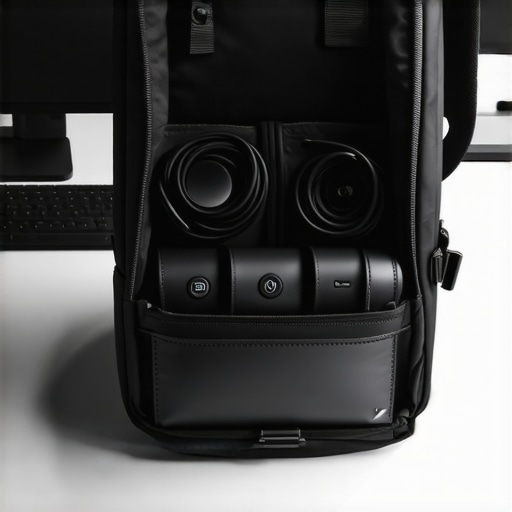
I stopped relying on the ‘goodwill’ of communal spaces years ago. If you want to maximize productivity in your startup’s conference rooms, you need a redundant kit. This means carrying your own high-speed HDMI 2.1 cable, a dedicated 100W GaN charger, and a physical Ethernet adapter. Why? Because the hidden drag of slow office Wi-Fi can cost you hours of billable time every month. According to the Cisco Webex Room Kit Mini technical specifications, a 120-degree field of view is critical for ensuring every participant in a small meeting room is visible without digital distortion. If you are relying on an old laptop webcam, you are effectively muting your visual presence. I personally use a portable 4K webcam and a dedicated directional microphone because the acoustics hack for crystal clear client pitches isn’t just about the room—it is about the hardware you bring into it.
How do I maintain professional consistency when my office changes every week?
The secret is a standardized ‘launch’ routine. Whether I am using a day pass or my dedicated desk, I spend the first five minutes running a speed test and checking my lighting. I’ve realized that the truth about hot-desking is that it only works if you are self-contained. I keep my digital environment identical across devices so that no matter where I sit, my ‘office’ feels the same. This consistency is what allows me to scale my output without the friction of a changing zip code.
The Invisible Thief Hiding in Your Startup Budget
Maintenance isn’t just about cleaning your keyboard; it is about auditing your overhead. I recommend a monthly 10-minute audit to see if your office space is wasting money. Are you paying for a 24/7 suite when you only use it on Tuesdays? Are you ignoring the fact that why a basic warranty won’t save your startup from a hardware disaster is because downtime is more expensive than the repair? I’ve started setting aside a ‘friction fund’ specifically for replacing cables and chargers the moment they show wear. It sounds pedantic until you’re the one in the innovative meeting rooms with a flickering screen and a sweating investor.
Deciding When to Quit the Nomad Life for Good
There comes a tipping point where the flexibility of a lounge becomes a liability. Scaling from 2 to 20 requires a shift in mindset. You move from seeking ‘luck’ in the hallway to seeking ‘flow’ in a private hub. I predict that in the next few years, we will see the rise of ‘modular micro-hubs’ where your office furniture automatically adjusts its height and lighting the moment you tap your phone on the desk. Until then, you have to be your own infrastructure manager. If your team is spending more time looking for a quiet corner than doing deep work, you’ve outgrown your current tier. Don’t let your growth be stunted by a fear of commitment. Try this today: Run a ‘ping’ test on your current desk. If your latency is over 50ms, move. Your focus is too valuable to lose to a packet drop.
The Unexpected Reality of Building a Business in Public
Looking back, my biggest hurdle wasn’t the code or the funding; it was the isolation I mistakenly called ‘focus.’ I used to think that why startups fail when they isolate in home offices was just a catchy headline, but I lived it. Real growth happens in the friction between your ideas and the world. If you’re always optimized for ‘efficiency,’ you’re effectively optimized against ‘discovery.’ I’ve learned that a slightly longer wait for the elevator is often more profitable than an extra five minutes of emails. It took me years to realize that the best business deals happen in the hallway, not because of the space itself, but because humans are wired for serendipity.
My Daily Setup for a Frictionless Office
I don’t leave my success to chance anymore. My backpack always contains a 10-foot HDMI 2.1 cable because I’ve learned the problem with bring-your-own-device settings can derail a meeting in seconds. I also swear by the ‘5-minute room prep’ rule: walk in early, check the lighting, and ensure the acoustics are right. If you want to dive deeper into the science of space, check out the University of Minnesota research on the Cathedral Effect or our guide on how to choose the perfect conference room for high-stakes decisions. These small technical edges aggregate into a massive professional advantage over time.
Step Out of the Booth and Into the Game
The transition from a solo founder to a leader happens the moment you start treating your environment as a strategic partner. Whether you are using a day pass to test your next potential office or you’re ready for a dedicated desk, the goal is the same: visibility. Don’t let your next big idea die in a quiet corner. Go stand in that printer line, ask the person next to you about their day, and watch how quickly the world opens up to you. Startup success is a team sport, even when you’re a team of one. Ready to make your move? You can always contact us to find a space that fits your current stage. What is the most unexpected connection you have ever made while waiting for coffee or a print job? Let me know in the comments below!