
I’ll never forget the night I blew a potential Series A lead because I thought a trendy gastropub was the right move. There I was, sweat pooling under my blazer, literally yelling into the ear of a very confused venture capitalist while a table of ten celebrated a birthday party three feet away. It was a mess. I’ve realized since then that the dinner part of an investor dinner is often just a polite excuse for a high-stakes negotiation. When the noise floor is too high, you aren’t building rapport; you’re just annoying the person holding the checkbook. Today, I’m walking you through exactly how I stopped relying on OpenTable and started looking at spaces that actually facilitate a deal.
Stop Betting Your Future on a Noisy Dining Room
The biggest mistake I made early on—and trust me, it’s a common one—was thinking that a high price tag at a Michelin-star joint equated to a professional environment. It doesn’t. In fact, the cost of a bad first impression can be astronomical if your guests can’t even hear your value proposition. I once spent $600 on appetizers just to have the investor check his watch every five minutes because he couldn’t concentrate. It was painful. We need to talk about why we’re so afraid to step away from the traditional restaurant model. We worry it’ll feel stiff or that we’ll look cheap. But the reality is that the logistics of hosting a successful angel investor dinner require a level of control that a public dining room simply cannot offer. You need to control the lighting, the acoustics, and most importantly, the interruptions. Why your pitch failed in that noisy coffee shop is the same reason it will fail in a loud restaurant: a total lack of focus.
Does a Non-Restaurant Venue Actually Kill the Vibe?
I get the skepticism. You’re probably thinking that a conference room feels like a dental office and a gallery feels too cold. But have you ever tried to pitch a vision while a waiter interrupts you to ask if you want sparkling or still? Research published in the Journal of Environmental Psychology suggests that high background noise in dining environments can actually diminish cognitive processing power and increase stress levels during complex social interactions. By choosing a private lounge or a boutique flex space, you’re signaling that you value the investor’s time and their brainpower. If you’ve ever had a high-stakes meeting derailed by a noisy crowd, let me know—I’d love to hear how you handled it. We’ve all been there, right? Finding a spot that isn’t a restaurant isn’t just about silence; it’s about curated exclusivity. Whether it’s managing high-stakes board meetings or hosting an intimate five-person dinner, the venue should serve as a silent partner in your pitch. You want them focused on your MRR, not the saltiness of the sea bass. We’re going to look at how to scout these locations without losing that premium feel that keeps the energy high.
Execute Your High-Stakes Dinner with Precision
Once you move past the idea of a public restaurant, you have to treat the venue like a product launch. You are the director of this experience. Start by physically visiting the space during the same time window as your planned event. A room that is silent at 10:00 AM might be right next to a heavy metal yoga class at 6:00 PM. I once ignored this and had to explain our burn rate over the muffled bass of ‘Enter Sandman.’ It was humiliating. You absolutely must learn how to find a quiet meeting room on short notice if your original plan goes south, but ideally, you’ve done the legwork beforehand.
Check the Walls Before You Check the Menu
Sound is your biggest enemy. I have seen founders spend thousands on a space only to realize the glass partitions have zero soundproofing. If you can hear the person in the hallway on a phone call, your investor can hear the janitor’s cart rattling. I now carry a simple decibel meter app, but even just a ‘clap test’ helps. You need to vet a meeting room for acoustic privacy before booking to ensure your trade secrets don’t become common knowledge in the lobby. If the room is too echoey, it creates mental fatigue. Use a space with rugs, soft furniture, or acoustic panels; the acoustic fix for echoey conference rooms is often as simple as choosing a room with more fabric and fewer hard surfaces.
The Invisible Advantage of Seamless Tech
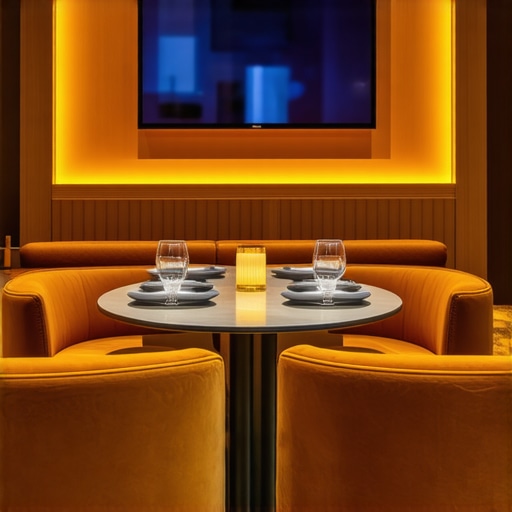
Nothing kills the momentum of a great dinner like fumbling with an HDMI cable for fifteen minutes. The transition from the ‘social’ part of the meal to the ‘business’ part of the evening should be as smooth as a software update. I once tried to show a demo on my 13-inch laptop while the investor was still chewing steak; he had to lean in so far he almost knocked over his wine. It was awkward. Now, I only book spaces where I can air-drop my presentation to a massive wall-mounted display. You will find that your pitch deck looks better on a forty-inch screen than a laptop because it commands the room’s attention and allows everyone to maintain a comfortable posture. This is a core part of how to host a VIP demo without a corporate headquarters—you use the venue’s hardware to look bigger than you actually are.
Simplify the Meal to Amplify the Message
The logistics of the food itself can be a trap. If you bring in a five-course meal with servers constantly entering and exiting, you’ve just recreated the restaurant problem you were trying to escape. I’ve found the best success with high-end, ‘family style’ catering or pre-plated gourmet boxes that stay out of the way. During one Series A dinner, I opted for a high-end sushi spread that was laid out before the investor arrived. It removed the ‘ordering’ friction entirely. We spent zero time looking at menus and 100% of the time talking about the roadmap. Ensure the space has a staging area so the cleanup happens out of sight. You want the environment to feel like an extension of your brand: efficient, high-quality, and completely under control. This level of detail is exactly what you need when vetting a boardroom that doesn’t feel like a hospital but still functions like a command center.
We’ve talked about the tech and the catering, but there is a deeper layer to this that most founders completely overlook. Everyone tells you to find a space that looks ‘innovative,’ but in my experience, that’s exactly where the trouble starts. We have been conditioned to think that high-energy, open-concept spaces are the hallmark of success. But when you are sitting across from a seasoned VC, that ‘startup energy’ often translates to a lack of professional maturity. The hidden nuance that most people get wrong is focusing on the aesthetic rather than the psychological safety of the room. Have you ever fallen into this trap? Let me know in the comments.
Is Your Meeting Room’s Layout Subconsciously Killing the Deal?
The biggest mistake I see now is the obsession with transparency. We love glass walls because they feel modern, but they are a nightmare for high-stakes negotiations. There is a specific ‘oops’ factor here: the goldfish bowl effect. If your investor feels like the entire coworking floor is watching them eat or, worse, watching you pitch, their guard goes up. I’ve learned that keeping your startup’s trade secrets safe in a public lounge isn’t just about the data on your screen; it’s about the visual privacy of the participants. A study published in the Journal of Corporate Real Estate highlights that environmental factors, particularly visual and acoustic privacy, are directly linked to the level of trust established during first-time business interactions. If the space feels exposed, the conversation stays surface-level.

Beyond privacy, you have to look at the ‘invisible’ logistics. Founders often book a room based on a glossy website photo, only to realize the Wi-Fi drops out every time the microwave in the communal kitchen runs. It sounds minor, but the hidden drag of slow office Wi-Fi on your burn rate is nothing compared to the momentum you lose when your live demo freezes in front of a potential lead. This is why I always suggest you use a day pass to test your next potential office before you ever host a VIP. You need to know the ‘pulse’ of the building. Is there a loud cleaning crew at 5 PM? Does the AC sound like a jet engine? These are the factors that determine if you look like a polished CEO or a kid playing office in a basement.
Stop Equating Amenities with Productivity
Another common myth is that more perks equal a better experience. I used to think the ‘free beer’ and ‘luxury snacks’ were selling points. They aren’t. In fact, the true cost of free coffee in popular coworking hubs is often a distracted, high-traffic environment that kills deep focus. When you are choosing the perfect conference room for business success, you aren’t looking for a playground; you’re looking for a sanctuary. This is the difference between a standard meeting room and a real war room. One is for status updates; the other is for closing. If the room doesn’t have an ergonomic setup, your guest will be thinking about their lower back pain instead of your valuation. Trust me, ergonomic furniture is the best investment for your seed round because it keeps the decision-makers in their seats longer. You want to control every variable so that the only thing left to discuss is the future of your company.
It’s one thing to nail a single investor dinner; it’s another to build a system where every interaction feels this premium. I’ve realized that professional maturity comes down to your ‘go-bag.’ I never head into a meeting without a backup for my backup. This is why I love that our private office suites stock extra Surface Pro chargers for members—it’s that level of obsessive detail that prevents a dead battery from killing a $2M round. You need to be ready for the long haul. If you’re hunting for the exact chair you need for a 12-hour coding sprint to prep for a demo, the last thing you want to worry about is if your venue’s hardware will fail you. I personally use the Shure MV7 for remote participants to ensure they hear me with ‘studio’ authority, even if I’m in a glass box. According to the International WELL Building Standard (v2), the integration of sound masking and specific reverberation times is non-negotiable for high-focus environments. If the room sounds like a hollow drum, you’re losing the psychological battle for attention before you even speak.
How do I keep these high-stakes standards consistent as we scale?
As your team grows, you can’t be the only one vetting every room. You have to create a ‘Venue Playbook.’ This becomes vital when you’re scaling from 2 to 20 and you can no longer justify hot-desking for your leadership team. You need to empower your ops person to learn how to pick a membership tier that scales with your actual meeting frequency, not just your headcount. I’ve seen so many founders hit a growth spurt and suddenly realize they’re spending thousands on incidental room bookings because they didn’t bake those needs into their original plan.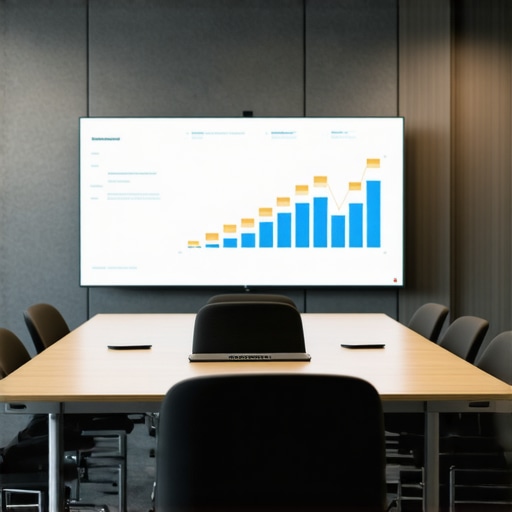
Why Your Second Office Must Be Smarter Than Your First
The trend is moving away from ‘cool’ and toward ‘functional intelligence.’ I predict that the future of conference rooms in startup ecosystems will involve integrated AI that automatically adjusts lighting and temperature based on the participants’ physiological responses to keep the energy optimal. It sounds like sci-fi, but ‘environmental optimization’ is the next big frontier for VC-backed firms. For now, focus on the basics: the furniture. Why ergonomic furniture is the best investment for your seed round isn’t just about comfort; it’s about endurance. If you want to scale, you need a space that supports the physical reality of hard work. My advice? This week, take your most important deck, go to your current space, and do a full ‘stress test’ of the audio-visuals. If it takes more than 30 seconds to connect, change your venue before your next big lead walks in.
Hard Lessons from My Most Expensive Venue Mistakes
Reflecting on those early dinner disasters, I’ve realized that the ‘perfect’ space is rarely the flashiest one. First, I learned that silence isn’t just a preference; it’s a prerequisite. Why your pitch deck won’t save you from a noisy meeting space is a lesson you don’t want to learn the hard way during a term sheet negotiation. Second, visual privacy is worth more than a panoramic view. If your investor feels watched, they won’t be candid. Lastly, never assume the venue’s staff understands your timeline. You have to be the one to manage noise complaints in a shared workspace or coordinate the flow of catering to ensure it doesn’t break the conversation’s rhythm. I used to think the location did the work for me, but now I know that the founder is the one who must command the room’s energy.
My Essential Toolkit for Winning Over Investors
To keep things running smoothly, I’ve developed a standard ‘meeting kit’ that I bring to every external venue. I always carry a high-quality portable speaker for remote participants and a backup mobile hotspot to ensure the demo never lags. I also recommend checking out the secrets to a successful networking mixer without the cringe if you’re moving from a 1-on-1 dinner to a larger group setting. For founders on a tighter lead, you can still host a product demo that looks professional on a budget if you focus on hardware reliability rather than the zip code. I personally swear by a physical ‘tech checklist’ that I run through twenty minutes before the guest arrives to eliminate any last-minute friction.
Own Your Environment to Own the Outcome
At the end of the day, the venue you choose for your investor dinner is a reflection of how you will run your company. It shows attention to detail, respect for the other person’s time, and your ability to control a complex situation. Don’t leave your next funding round to chance by picking a restaurant at random. Whether you are using specialized meeting rooms, startup hubs, or a boutique private office, make sure the space works for you, not against you. The right environment provides the clarity you need to close and signals that you are ready for the big leagues. Have you ever had a brilliant pitch ruined by a loud neighbor or a tech glitch? Let me know your horror stories in the comments below!