

I used to think my team’s creative slump was just a lack of talent or maybe the wrong Slack integration. I was wrong. I spent eighteen months leading a dev team in a converted garage with seven-foot ceilings. We felt “focused,” but our ideas were repetitive and safe. It wasn’t until I dragged everyone to a high-ceiling loft for a week-long sprint that I realized we hadn’t been uninspired—we were just physically cramped.
Why Your Brain Needs More Vertical Space to Dream Big
It sounds like pseudo-science, doesn’t it? The idea that the distance between the floor and the ceiling could dictate your company’s next pivot. But it’s a very real psychological phenomenon called the Cathedral Effect. When I finally decided on ditching the basement for a professional workspace, the shift in our output was almost instant. We stopped worrying about the “how” and started dreaming about the “why.” We moved from survival mode to expansion mode simply by changing the volume of air above our heads.
Is Extra Headroom Really Worth the Hype?
You might be skeptical. After all, a desk is a desk, right? But the data suggests otherwise. A landmark study by Joan Meyers-Levy at the University of Minnesota found that people in rooms with ten-foot ceilings are significantly more likely to engage in abstract, creative thinking than those in eight-foot rooms. Lower ceilings push us toward “item-specific processing,” which is great for spreadsheets but terrible for long-term innovation. If you’ve been looking for innovative meeting rooms that boost startup creativity, you need to look up before you look at the coffee machine.
The Early Mistake That Cost Me a Product Launch
Early in my career, I prioritized “coziness” and low rent over psychological air. I booked a tiny, dark room for our most important strategy session, thinking it would keep us focused. Instead, we ended up arguing over trivial details because we couldn’t think abstractly. It’s the same reason your pitch deck fails in a dark hotel basement; the environment is literally throttling your cognitive range. Today, we’re going to solve this by identifying exactly how to vet a space for the mental “breathing room” your team deserves. Have you ever felt your brain “turn off” the second you walked into a cramped conference room? I certainly have. [image_placeholder] When we consider why founders are moving back to physical brainstorming sessions, it’s not just for the camaraderie—it’s for the environment that a home office simply can’t replicate. Your meeting room needs to be more than just a table; it needs to be a catalyst for the next big thing.
Vetting Your Next War Room for Maximum Mental Reach
When you are moving from the survivalist grit of a home office to a professional environment, you can’t just pick the first room with enough chairs. You have to audit the volume of the space. Think of your brain like a gas; it expands to fill the container you put it in. If the container is small, your thoughts stay small. Here is exactly how to strip away the marketing fluff and find a space that actually facilitates high-level strategy.
Look Up Before You Pay Up
The very first thing I do when entering a potential workspace is ignore the furniture and look at the ceiling height. If it is less than ten feet, it is a room for execution, not ideation. Use these lower-ceiling spaces for your sprint reviews or accounting syncs. But for your big ‘where are we going’ pivots, you need vertical clearance. I learned this the hard way when I tried to how to transition your team from a garage to a real office only to realize I’d just moved us into a slightly more expensive garage with the same cramped psychological ceiling. High ceilings signal to the brain that there are no immediate physical constraints, which lowers the barrier for risk-taking and abstract thought.
Let the Sun Do the Heavy Lifting
Lighting isn’t just about ‘vibes’; it’s about circadian rhythm and cognitive load. Fluorescent tubes are the enemy of innovation. When you are doing your walkthrough, check the orientation of the windows. You want soft, indirect northern light if possible. Direct glare makes everyone squint, which mimics the facial expression of anger and frustration—not exactly the mood you want for a brainstorm. Knowing how to vet a potential office space for natural light will save you more in aspirin and lost productivity than any ergonomic chair ever could. 
Kill the Cable Jungle to Save Your Flow
Nothing kills a creative breakthrough faster than a fifteen-minute struggle with a Dongle. I once sat in a board meeting where we were about to close a vital partnership, but the mood evaporated because we couldn’t get the HDMI to sync with the projector. It was embarrassing and costly. This is why your conference room needs better technology and fewer-cables. A truly professional space should be ‘plug-and-play.’ If you see a tangled mess of wires under the table, walk away. It’s a sign that the space isn’t managed for the user experience, but for the convenience of the IT guy. Your focus should be on the whiteboards, not the wiring.
The 30-Second Acoustic Test You Can’t Skip
Privacy is the silent partner of creativity. You can’t think big if you’re worried the neighboring startup can hear your proprietary secrets or your messy internal debates. I once booked what looked like a ‘futuristic’ glass pod for a sensitive hire negotiation. It looked incredible, but we quickly realized the glass had the acoustic insulation of a wet paper towel. We could hear the guy next door chewing his lunch. You must learn how to vet a meeting room for acoustic privacy before booking by doing a simple ‘clap test’ or having a colleague stand outside while you speak at a normal volume. If the sound bleeds, the ideas will hide.
Use the Boardroom Checklist for Professionalism
Finally, don’t settle for a room that feels like a sterile clinic. You need a space that inspires confidence in your team and your investors. Look for a checklist for a boardroom that doesnt feel like a hospital—things like textured walls, comfortable (but not sleepy) seating, and actual personality. If the space feels like a DMV waiting room, your strategy sessions will feel like a chore. You are looking for an environment that acts as a catalyst, pushing your team toward the future rather than grounding them in the mundane present. This is how you how to manage noise complaints in a shared workspace without sacrificing the energy that makes a startup thrive.The biggest mistake I see founders make isn’t choosing a bad location—it’s choosing a space that is too ‘perfect’ in all the wrong ways. Everyone tells you that you need a sprawling, 20-person boardroom to look legitimate or feel successful. In reality, following the two-pizza rule for booking the right size meeting room is far more effective for maintaining intensity. If the room is too large, the social density drops, and with it, the creative energy. You want ‘constructive friction,’ where ideas bounce off the walls and participants, not get lost in a cavernous void. 
The Amenities Trap That Kills Your Focus
We’ve all been seduced by the promise of free-flowing kombucha, vintage record players, and designer bean bags. But let’s be honest about the truth about membership perks—what you actually need versus what is just expensive marketing noise. Early in my second startup, I signed a six-month lease because the building had a ‘meditation garden.’ We used it exactly twice. Meanwhile, the actual infrastructure was failing us; the hidden drag of slow office wi-fi on your burn rate eventually cost us a major software deployment because we couldn’t push code fast enough. Don’t let the surface-level polish distract you from the essentials. You must know how to tell if a coworking membership is worth the price by auditing the hardware and the help desk, not the happy hour schedule.
Why Does Your Team Stop Talking in Massive Open Spaces?
There is a counter-intuitive nuance to office design that most ‘hip’ workspaces get fundamentally wrong. A landmark Harvard study by Ethan Bernstein and Stephen Turban found that when companies transitioned to open-plan offices, face-to-face interaction actually dropped by roughly 70%. When people feel over-exposed and visible from every angle, they don’t collaborate more; they retreat into their headphones and Slack to reclaim their privacy. This is exactly why your pitch deck won’t save you from a noisy meeting space—if the environment forces your team to mentally check out, the best strategy in the world won’t be executed. You aren’t just looking for a desk; you are looking for a sanctuary where it is safe to be loud and messy with ideas.
Don’t Ignore the Cultural Vibe of the Building
You can have the best ergonomic chairs and fiber-optic speeds in the city, but if the building’s culture is toxic or overly corporate, your team will subconsciously mirror that stiffness. You need to learn how to spot a toxic coworking vibe in under five minutes. Pay attention to how people interact in the hallways. Are they collaborative and open, or is everyone guarding their laptop screens like they are protecting state secrets? The communal energy surrounding your private office is just as vital as the office itself because it dictates your team’s baseline stress level. Have you ever fallen into this trap of picking ‘cool’ design over ‘functional’ flow? Let me know in the comments.I’ve seen dozens of founders burn through their seed round while ignoring the plumbing of their productivity. You can have the most inspiring view of the city, but if your internet is flaky, you’re essentially working in a beautiful cage. This is where the hidden drag of slow office wi-fi on your burn rate becomes a literal financial leak. I personally use a tool like Wi-Fi Analyzer to map dead zones before I even unpack my monitor. If the ping is over 50ms, I’m out. According to Cisco’s Hybrid Work Index, high-performance teams require consistent, low-latency connections to avoid the cognitive fatigue that comes with even micro-stutters in video calls. This isn’t just about raw speed; it’s about the psychological safety of knowing your tools won’t betray you during a demo.
The Hardware Hacks That Save My Sanity
It sounds trivial until you’re ten minutes late for a board meeting and your laptop is at two percent. That’s why our private office suites stock extra surface pro chargers for members—we realized that small hardware friction points create massive mental blocks. I also carry a ‘tech survival kit’ with every possible dongle because relying on a space to have the right gear is a gamble. You need to know how to find a conference room that actually has working adapters, or better yet, bring your own. If you’re tired of the DIY struggle, looking into why ergonomic furniture is the best investment for your seed round will remind you that the physical comfort of your team is just as important as the digital speed. 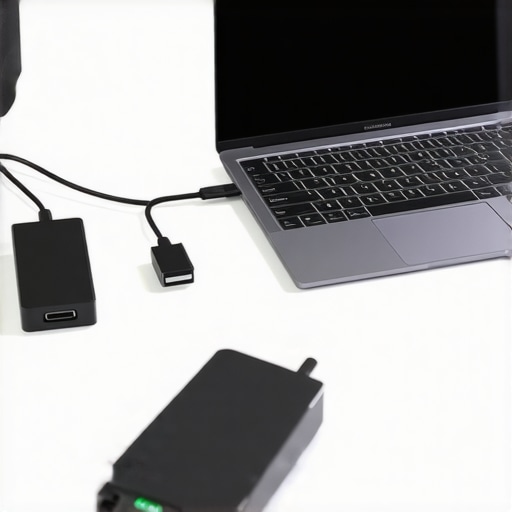
How do I maintain my team’s focus as we scale?
Scaling is the ultimate test of your workspace strategy. When you’re moving from two founders to a team of twenty, the rules of the game change. You have to decide when to stop hot desking and invest in a dedicated hub. The ‘hot desk’ phase is great for keeping costs low, but eventually, the lack of a ‘home base’ starts to erode team identity. I’ve found that why we moved our dev team to a dedicated startup hub was less about the desks and more about the ability to leave a whiteboard filled with messy ideas overnight without someone erasing it. To maintain this momentum, I suggest a monthly ‘space audit’ where you ask the team what’s actually annoying them—is it the noise? The coffee? The lack of natural light?
What the Future of Creative Spaces Actually Looks Like
I predict we are moving toward ‘hyper-contextual’ spaces. We are already seeing the beginning of this with the future of conference rooms in startup ecosystems involving AI-driven acoustic tuning. Imagine a room that automatically dampens sound when it detects a high-stakes negotiation or brightens the ‘color temperature’ of the lights when a brainstorming session starts to lag. We are moving away from static four-wall boxes toward environments that breathe and adapt to our cognitive needs. If you want to stay ahead, stop looking for ‘an office’ and start looking for a ‘performance-enhancing environment.’ This involves knowing how to pick an office that fits your startups growth pace so you aren’t stuck in a space that no longer serves your cognitive load. My challenge to you: Audit your current setup this week. Use a speed test app in every corner of your office and check if your meeting rooms pass the ‘dongle test.’ If they don’t, it’s time to upgrade your standards.
What I Wish I Knew Before Signing My First Membership
Reflecting on the last decade of building companies, I’ve realized that the physical walls around your team act as a psychological ceiling for your revenue. One major lightbulb moment was discovering how coworking spaces unlock innovation far better than isolated home offices ever could. I used to think the “vibe” was a fluff metric, but I’ve seen firsthand why your next big hire cares about your office location—it often comes down to the energy they feel the moment they walk through the front door.
I also learned that how to choose the perfect conference room for business success isn’t about the price tag; it’s about the silence and the vertical space. If the room feels like a closet, your ideas will be small. If you follow a checklist for a boardroom that doesn’t feel like a hospital, your team will actually want to stay and solve the hard problems. Finally, remember that networking isn’t a chore; it’s a byproduct of being in the right room. Stop treating your workspace like a utility and start treating it like a strategic asset.
Tools and Rules That Kept My Dev Team Sane
To keep our momentum high, I rely on a few specific resources that go beyond the usual office supplies. First, I always keep the Cisco Hybrid Work Index bookmarked; it provides the empirical data I need to justify why we invest in high-end tech over free snacks. Speaking of snacks, I strictly enforce the two-pizza rule for booking the right size meeting room to ensure our brainstorms stay tight and focused. For technical reliability, I never travel without a dedicated Wi-Fi analyzer app. I’ve learned the hard way that the truth about membership perks—what you actually need is always a stable connection and working hardware, not a vintage record player.
[image_placeholder]
Stop Fighting Your Environment and Start Winning
The transition from a garage or a basement to a professional space is more than just a logistical move; it’s a commitment to your company’s future. You don’t have to wait until you have a Series A to provide your team with the psychological air they need to breathe. Whether you are hunting for innovative meeting rooms that boost startup creativity or just a quiet corner to finish a coding sprint, your environment is the foundation of your output. Don’t let a cramped ceiling or a flaky router be the reason your vision stays grounded. It is time to find a coworking home that matches your actual ambition. What is the one thing in your current workspace that drives you absolutely crazy? Let me know in the comments below!